Selling A Home In Sherwood Park: Strategy, Pricing, And Presentation

If you are selling a home in Sherwood Park, you cannot rely on broad Toronto averages and hope for the best. This is a small, established pocket where street feel, house style, lot characteristics, and presentation can shape buyer response in a big way. In this guide, you’ll learn how to price with precision, prepare your home for today’s digital-first buyers, and launch with a strategy that fits current market conditions. Let’s dive in.
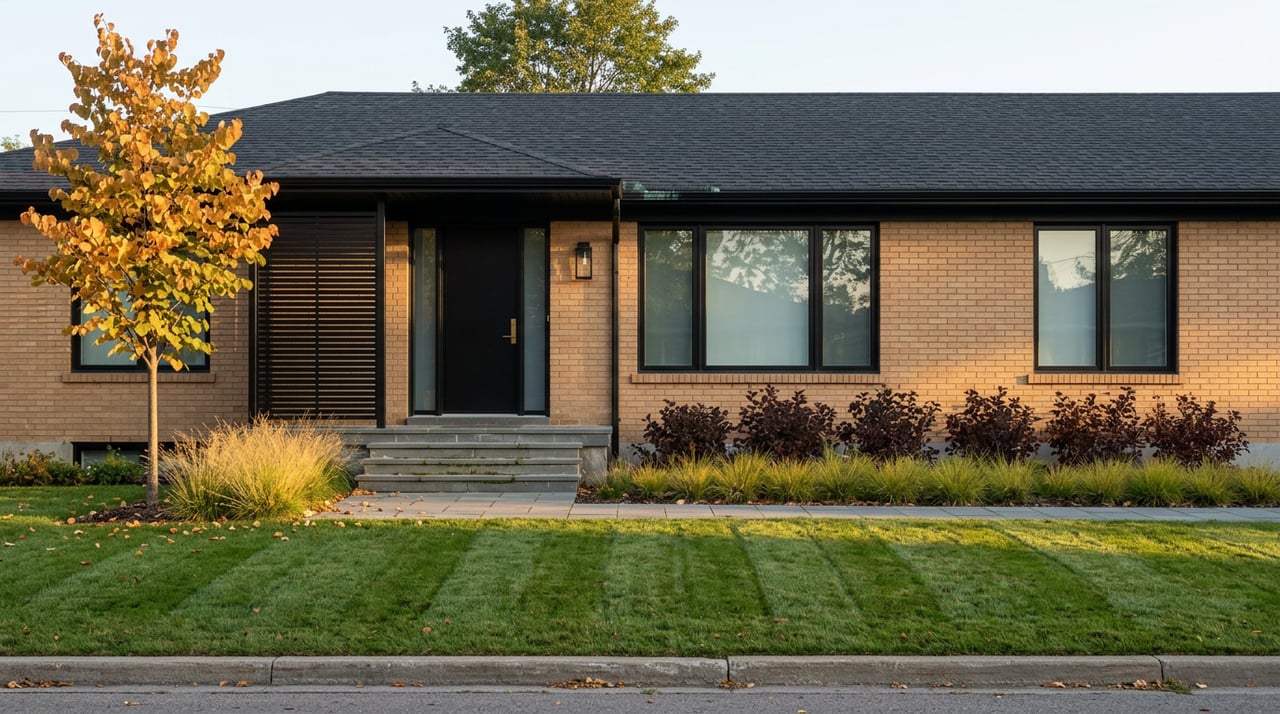
Sherwood Park is not a uniform, plug-and-play market. According to the City of Toronto, the residential area north of the park is made up mainly of bungalows, semi-detached homes, and fully detached homes built mostly between 1910 and 1940, with some later infill along winding streets. The same city background document also notes the area’s rolling topography, mature tree canopy, and defined boundaries near Mount Hope Cemetery, Blythwood Ravine, Blythwood Road, and Bayview Avenue.
That matters when you sell because buyers do not evaluate this pocket the same way they would a newer subdivision or a broader Toronto district. In Sherwood Park, value often comes down to the details: the exact block, the home’s era and condition, its lot and site, and how well the property connects to the area’s established streetscape.
The City of Toronto also explains that its neighbourhood system is designed for statistical reporting using census tracts and similar-size populations, which is a good reminder that broad citywide comparisons can miss the nuance of a highly localized area. For sellers, that means your pricing and positioning should be built around the closest possible local context, not shorthand based on Toronto as a whole. You can explore that framework through the City’s neighbourhood profiles and reporting approach.
When buyers consider Sherwood Park, they are often responding to durable features they can see and verify right away. The area’s mature housing stock, winding streets, ravine setting, and established landscape all contribute to how the neighbourhood feels during a showing.
The park itself is also part of that value story. The City lists Sherwood Park as a 6.78-hectare park with a dog off-leash area, playground, wading pool, picnic shelter, picnic sites, and parking lot. The City’s Discovery Walks information also places the area within the Northern Ravines & Gardens route, reinforcing the park-and-ravine identity that many buyers notice quickly.
This does not mean every home should be marketed the same way. It means your sale strategy should highlight the features that are authentic to your property and that connect naturally to what makes Sherwood Park distinct.
In a pocket like Sherwood Park, pricing discipline matters. The strongest pricing strategy starts with the closest and most relevant sold comparables, especially homes with a similar housing type, lot profile, site condition, construction era, and level of renovation.
That approach lines up with the Toronto Regional Real Estate Board’s guidance on pricing tools. TRREB notes that its MLS® Home Price Index is designed for apples-to-apples comparisons because it uses both quantitative and qualitative housing features and tends to be less volatile than average or median prices.
For sellers, the practical takeaway is simple: broad averages can be useful background, but they should not drive your asking price on their own. A detached home on one winding street in Sherwood Park may compete with a very small group of true substitutes, and that makes local precision more important than ever.
When reviewing recent sales, focus on homes that match your property as closely as possible in these areas:
If a comparable misses on several of these points, it may be less useful than it first appears. In Sherwood Park, small differences can have an outsized impact on buyer perception.
Your pricing strategy also needs to reflect current market conditions, not just neighbourhood identity. In TRREB’s February 2026 Market Watch, the board reported 3,868 home sales, down 6.3% year over year, alongside 10,705 new listings. TRREB also reported that the MLS® HPI composite benchmark was down 7.9% year over year, while the average selling price was down 7.1% to $1,008,968.
TRREB said resale market conditions tightened compared with February 2025, but buyers still had substantial choice. That is important for sellers because more choice usually means more comparison shopping, more scrutiny, and less room for aspirational pricing.
TRREB’s 2026 market outlook adds more context. The board forecast GTA sales between 60,000 and 70,000 transactions in 2026 and an average price between $1.0 million and $1.03 million, while noting that elevated inventory should help keep price growth in check. The same report also notes continuing affordability pressure, with the Bank of Canada holding the overnight rate at 2.25% on March 18, 2026.
In this kind of market, a strong result usually comes from preparation and realism, not guesswork. Buyers may still respond quickly to the right home, but they are often more selective and more value-conscious than they were in tighter inventory conditions.
That makes three things especially important:
Many sellers think of pricing and presentation as separate decisions. In practice, they work together. If your home is priced for the market but presented poorly, buyers may still hesitate. If it is beautifully presented but priced too high, buyers may scroll past it or compare it unfavorably to stronger-value options.
Presentation matters even more because the first showing usually happens online. In the National Association of Realtors’ 2024 buyer profile snapshot, all buyers used the internet in the home search process, 43% started their search online, and photos, detailed property information, and floor plans ranked among the most useful website features.
That means your listing needs to perform well before a buyer books a visit. Great media is not just decoration. It helps buyers understand the space, picture how it lives, and decide whether your home deserves a closer look.
Staging also has a clear role in helping buyers connect with a home. NAR’s 2025 Profile of Home Staging Snapshot found that 83% of buyers’ agents said staging made it easier for buyers to visualize a property as a future residence. The same survey found that 60% said staging affected some buyers and 26% said it affected most buyers.
For Sherwood Park sellers, that supports a practical mindset: staging is not just a finishing touch. It can be a value-support tool, especially in character homes where room function, flow, and scale need to read clearly in photos and in person.
The most commonly staged rooms in the survey were the living room, primary bedroom, and dining room. Those spaces often do a lot of heavy lifting in older homes, so clear styling and layout can make your home feel more coherent and more inviting.
Once your pricing and presentation are aligned, your launch should make it easy for buyers to engage with the home from anywhere. CREA’s materials on REALTOR.ca note that listings are presented with high-quality photos, videos, virtual tours, neighbourhood data, and contact information, and CREA says buyers and sellers are almost always better served by the broader exposure offered by an MLS® system once a property is publicly marketed. You can see that emphasis in CREA’s discussion of public marketing and cooperation policy.
For most public launches, that supports a comprehensive marketing package rather than a narrow rollout. In a market where buyers have options, it helps to remove friction and deliver as much clarity as possible from day one.
Before your home goes live, make sure you have:
This kind of package supports buyer confidence and gives your pricing strategy a better chance to succeed.
The best Sherwood Park sales usually do not happen by accident. They come from a plan that respects the area’s localized character, current buyer behavior, and the realities of today’s market.
If you are preparing to sell, your goal is not just to list your home. It is to position it properly from the start, using micro-comparables, honest market context, strong presentation, and a launch that reaches the broadest relevant audience.
That is where experienced, local guidance can make a real difference. If you are thinking about selling in Sherwood Park and want a tailored strategy for your home, connect with Claire Speedie to start your new chapter with clarity and confidence.

Claire has a keen interest in investment properties and looks forward to continuing to help her clients build their real estate investment portfolios.