Forest Hill or Rosedale? How Renovation Rules Differ
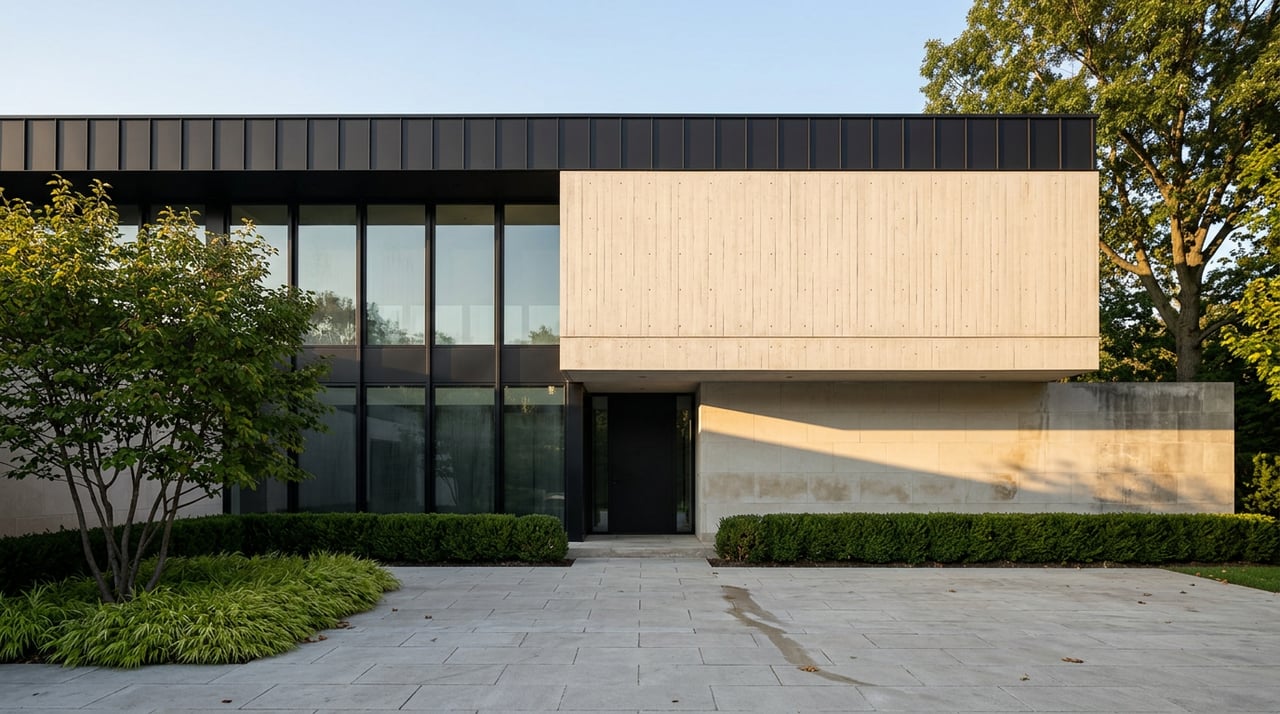
On August 26, 2026, Sotheby's International Realty Canada announced the highest residential sale in Forest Hill South's history. A home listed at $22 million closed at $23.5 million after three competing offers, the highest price paid for a Toronto home through MLS in nearly five years. Broker Jane Zhang handled the listing. The house itself was designed by architect Omid Taba of OE Design, and the firm's language around the sale called it the most significant recorded transaction in the neighbourhood's history.
That number is the headline. It is not the story worth understanding if you are comparing Forest Hill to Rosedale, the other Toronto address people mention in the same breath.
The real story is that a home like this could exist there at all, and legally clear the path to sale, in a way it likely could not two kilometres east.
Buyers weighing Forest Hill against Rosedale tend to treat them as interchangeable versions of the same thing: old money, big lots, mature trees, a short list of private schools nearby. Both neighbourhoods carry that reputation honestly. Where they diverge is in the legal architecture sitting underneath the physical one, and that difference decides what a homeowner is allowed to build, tear down, or design from scratch.
Rosedale runs on two formally designated Heritage Conservation Districts, North and South, both created under Part V of the Ontario Heritage Act. Together they cover roughly 1,800 properties, among the largest heritage overlays in the province. Streetscapes along Chestnut Park, Roxborough, and Highland Avenue fall under that protection, and the rule is specific: any change visible from the street, a new window, a different front door, replaced railings, altered brick, a new skylight, requires a Heritage Permit reviewed by the City's Heritage Preservation Services before a building permit can even be issued. In North Rosedale, that review typically runs three to four months. Larger proposals can go further, to the Toronto Preservation Board for additional scrutiny.
Forest Hill has never been wrapped in that kind of district-wide overlay. What it has instead is a smaller number of individually designated properties under Part IV of the same Act, plus a Heritage Register listing that triggers a 60-day demolition notice period but not a blanket design review. One example: 63 Old Forest Hill Road, a 1934 Arts and Crafts home with Tudor Revival detailing, designed by architect Douglas E. Kertland as part of a small cluster of Kertland houses near the Dunvegan Road junction. The City moved to designate it under Part IV in recent years specifically because it is one of a handful of properties that still reads as a unified architectural moment from that era. Most of Forest Hill's housing stock carries no such individual protection at all.
Forest Hill's architectural discipline came from somewhere else entirely, and it predates any heritage legislation by decades.
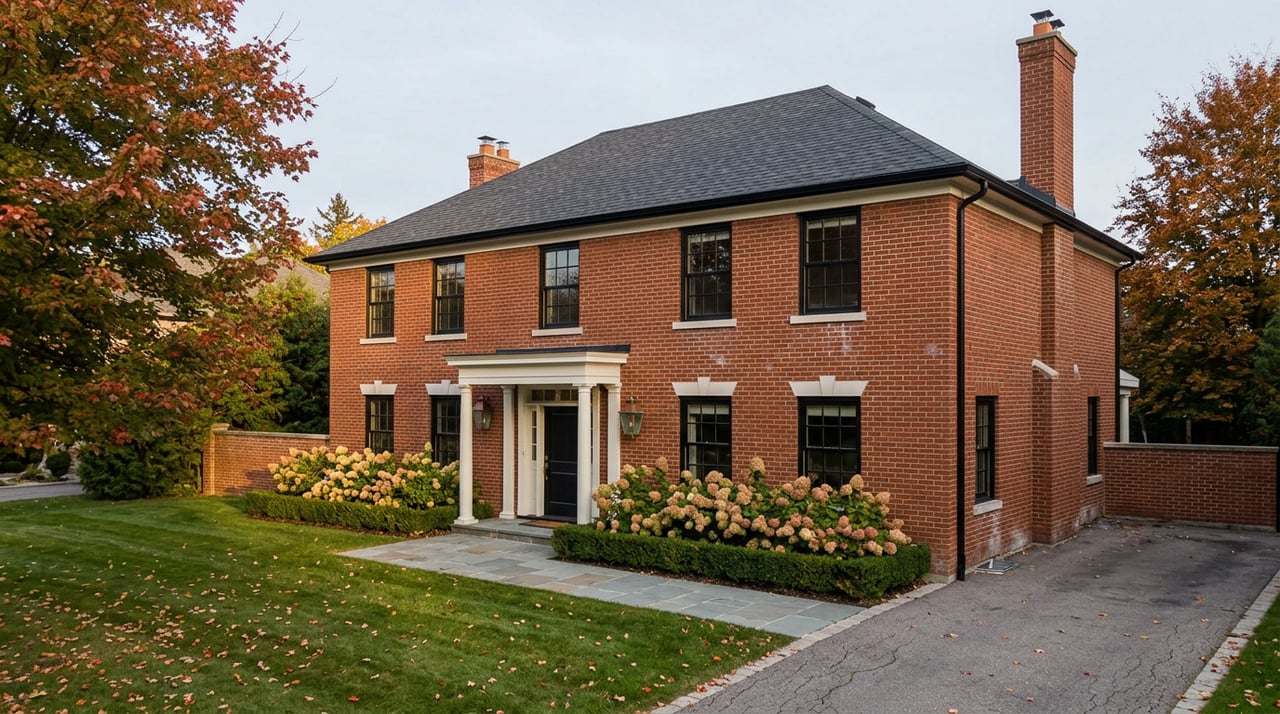
The Village of Forest Hill incorporated in 1923, having previously gone by the name Spadina Heights. Its planners wrote building codes into the young municipality's bylaws that required every home to be designed by an architect and a tree planted at the front of every lot. That is why Lower Forest Hill still reads as a cohesive collection of Georgian and Tudor Revival brick and stone houses built mostly through the 1930s and 1940s. The consistency was baked in at construction, not preserved afterward by a heritage plan.
Rosedale's HCDs, by contrast, were created later and for a different reason: to formally lock in a streetscape that residents worried might otherwise erode lot by lot. North Rosedale's designation study alone took more than fifteen months and documented all 917 residential properties in the district before council passed the bylaw.
Forest Hill was annexed into the City of Toronto in 1967 and never went through that same district-wide designation process. The result today is a neighbourhood where a 1927 Neo-Georgian estate can sit two doors down from a glass-walled contemporary build, and where a Committee of Adjustment variance, not a Heritage Permit, is usually the tallest hurdle standing between a buyer and a full rebuild.
The practical version, stripped of legal language:
None of this happens in a vacuum separate from the wider market. GTA detached homes averaged $1,291,690 in July 2026, down 5.1 percent year over year, a market that is still trading but clearly softer than its peak. Forest Hill's premium segment has largely sat outside that gravity. Renovated family homes on the neighbourhood's standard 50 by 137 foot lots have been trading in the mid three million dollar range as recently as 2025, and larger custom or fully renovated properties routinely land in the mid to high millions before you even reach a sale like the one that just closed in August.
Worth noting for anyone treating "Forest Hill" as a single market: it currently is not one. Forest Hill North is moving fast right now, homes averaging roughly nine days on market with about 93.6 percent of asking price achieved and close to one in six properties selling above list. Forest Hill South, where the record sale closed, is running at a different pace entirely, averaging 47 days on market with 8.3 percent of homes selling above asking. The neighbourhood that produced a $23.5 million record is, at the same moment, a slower-moving market than its northern half. That split matters as much as the heritage question when you're deciding where inside Forest Hill to actually look.
If Rosedale's appeal is that the streetscape is protected by law regardless of who owns the house next door, Forest Hill's appeal is closer to the opposite: the architectural consistency exists because of a century-old planning tradition, not a modern regulatory one, which means an individual buyer today has more room to reinterpret a lot than a Rosedale owner does.
Neither is the better choice in the abstract. One buys certainty about what the street will look like in ten years. The other buys latitude to build something the street has never seen, provided the Committee of Adjustment agrees with your setbacks and the address isn't one of the handful the City has already decided to protect.
That is the difference the August sale actually revealed. Not that Forest Hill can support an eight-figure home. Rosedale can too. It revealed that the specific kind of home that just set the record, an architecturally ambitious, fully modern statement piece, had a more direct legal path to getting built in Forest Hill than it likely would have found two neighbourhoods over.
Does buying in Forest Hill mean no heritage rules apply at all? No. It means most properties face none, but a specific subset, like 63 Old Forest Hill Road, carry individual Part IV designation that requires a Heritage Permit for exterior work. Always check the City's Heritage Register for the exact address before assuming either way.
Why did this particular sale set a citywide benchmark instead of a comparable Rosedale property? The public reporting on the sale points to the architectural ambition of the design itself, by Omid Taba of OE Design, as central to the price achieved. A home of that scale and contemporary design would face a materially different, and slower, approval path if it were proposed as an exterior renovation inside a Rosedale HCD.
Comparing Forest Hill to Rosedale on price alone will only get you halfway to the decision that actually matters, which is what each street will let you do with the house once you own it. If you're weighing the two and want a read on a specific address, on either side of that line, New Chapter Homes can walk you through what the Heritage Register actually says about it. Start your new chapter, request a home valuation, and get the real answer before you write the offer.
This article is general information, not legal, tax or financial advice. Consult a qualified professional about your situation.

Claire has a keen interest in investment properties and looks forward to continuing to help her clients build their real estate investment portfolios.